TEXAS FLOOD RISK, MEASURED NOT ASSUMED
The flood zone map
is not the risk map.
Since 2015, 53.6% of Texas NFIP claims came from properties rated outside the high-risk zones — and 55.2% with Hurricane Harvey excluded entirely. We compare private flood markets and the NFIP for Texas homes, businesses and associations, then explain the tradeoffs plainly.
WHY TEXAS FLOODS
Flat ground, heavy clay,
and a lot of rain.
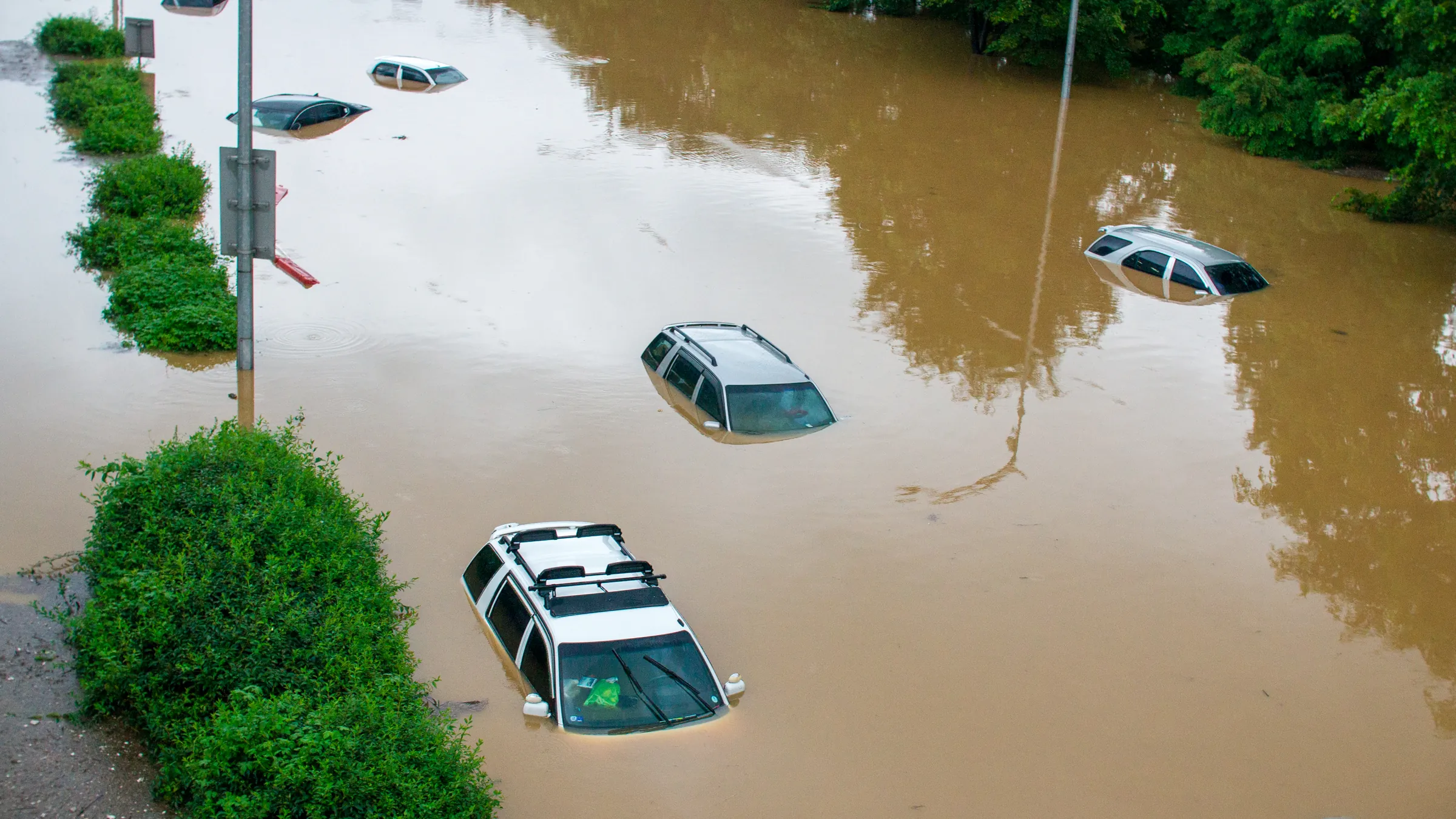
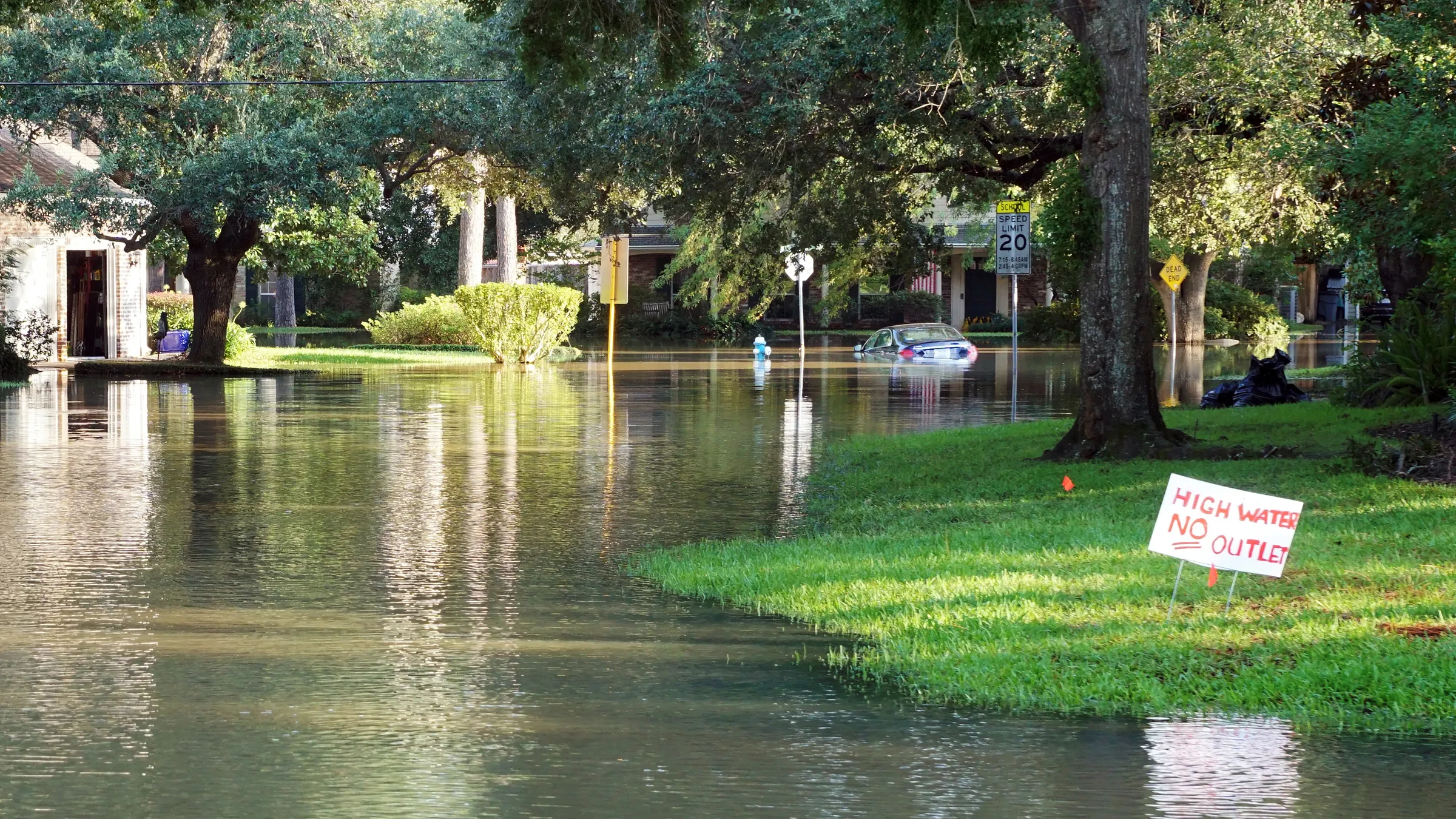
Texas floods from rainfall far more often than it floods from the sea. Wide, flat watersheds on tight clay soils shed water instead of absorbing it, bayous and creeks drain slowly, and a stalled tropical system can put a year of rain on a metro area in three days.
Homeowners insurance excludes rising surface water, and so does a windstorm policy. A separate flood policy is what pays to rebuild the structure and replace what was inside it.
See what can be covered →Rainfall and drainage
Streets, storm sewers and detention basins are designed to a standard. Texas rainfall regularly exceeds it, and the overflow goes into buildings.
Bayous, creeks and reservoirs
Slow-draining channels back up when a system stalls overhead, and controlled reservoir releases can flood neighborhoods well inland.
Coastal surge
On the upper and lower coast, storm surge pushes water inland ahead of the wind — a different mechanism, and a different policy, from wind damage.
WHAT THE CLAIMS DATA SAYS
Most Texas flood claims are filed by people the map said were fine.
Of the 150,690 NFIP claims filed on Texas properties with a date of loss since 1 January 2015, 53.6% were rated in a zone beginning X, B, C or D — the moderate- and low-risk zones, where no federal rule requires anyone to carry coverage.
That is not a Hurricane Harvey artefact. Excluding the Harvey window entirely, the share rises to 55.2%, and across 2021–2025 alone it is 56.2%. The national figure FEMA usually quotes, roughly 40%, understates Texas considerably.
COUNTY BY COUNTY
The pattern holds almost everywhere.
Break the same Texas claims data down by county and the out-of-zone share stays high across very different kinds of place — the border, the Gulf Coast, the big inland metros. Even Galveston, an island, sits above half.
One honest caveat, which argues the same way. These are the rated zones of people who bought NFIP coverage in the first place. Owners outside the high-risk zones buy it far less often, so if anything these figures understate how much Texas flooding happens outside the mapped floodplain.
NFIP claims with a date of loss on or after 1 January 2015, counted 15 September 2026. “Outside high-risk” means the rated flood zone begins with X, B, C or D. Source: OpenFEMA, FIMA NFIP Redacted Claims v2.
COVERAGE, WITHOUT THE GUESSWORK
Protection shaped around the property.
One flood-focused team for Texas residential, commercial and association needs.
Homes & condos
Building, contents and available loss-of-use options for owners, landlords and renters.
- Private and NFIP compared
- Lender-compliant options
- Coverage explained clearly
Business property
Coverage options for buildings, inventory and other eligible commercial exposures.
- Higher limits may be available
- Single or multiple locations
- Fast certificate support
HOAs & associations
Master-policy reviews and clear proposals for boards, managers and unit owners.
- RCBAP guidance
- Gap reviews for units
- Board-ready comparisons
INDEPENDENT ADVICE
Private flood or NFIP?
Let the property decide.
They are not the same product priced two ways. The NFIP follows a federal rate structure; private carriers underwrite with their own catastrophe models and set their own limits, so two quotes on one Texas address can differ in both price and what is actually covered. We look at the building, the lender, the limits and the waiting period, then compare what is genuinely available.
plus the NFIP
Private terms vary by carrier and eligibility. NFIP figures follow program rules for a residential building.
WHAT IT ACTUALLY COSTS
The range is wide.
Your address narrows it.
Texas premiums spread further than most states, because Texas contains both inland prairie and open Gulf coast. Elevation, construction, distance to water and the deductible you choose move the number more than the zone letter does.
A quote is the only way to know your figure — and because private carriers rate the same property on their own models, it is worth seeing both before deciding.
Get my Texas number →Ranges are typical, not quotes. Actual premium depends on the property, elevation, construction, coverage limits, deductible and carrier.
A TEXAS-ONLY TRAP
Windstorm insurance is not flood insurance.
A Texas Windstorm Insurance Association policy covers windstorm and hail. It does not cover flood damage — and that holds even when a hurricane’s own wind and rain are what caused the water to rise. Owners on the coast discover this after the storm more often than before it.
It also runs the other way. Some coastal properties must carry flood insurance in order to qualify for TWIA windstorm coverage at all. TWIA requires it when all three of these are true:
- any part of the property sits in a V, VE or V1–V30 flood zone;
- NFIP flood insurance is available for the property; and
- the structure was built, altered, remodeled or enlarged after 1 September 2009.
The requirement comes from Texas Insurance Code Chapter 2210 and TWIA’s Plan of Operation, and the minimum amount is set by formula. If you are buying or renovating on the coast, this is worth settling before closing rather than after.
WHAT HAPPENS NEXT
From address to answers in three steps.
- 1FIRST 2 MINUTES
Tell us about the property
Use the secure quote request, or call and talk it through.
- 2SAME BUSINESS DAY
We compare what is available
A licensed specialist reviews the private markets and the NFIP on price, limits and lender needs.
- 3WHEN YOU SAY GO
Choose and bind
We handle payment, paperwork and delivery to your lender.
FROM THE PANHANDLE TO THE VALLEY
Texas coverage with statewide reach.
Risk changes with elevation, drainage, watershed, construction and distance to the coast. We help Texas property owners compare what is available without reducing an address to its zone letter.
Houston & the Gulf Coast
Houston, Harris County, Sugar Land, Katy, The Woodlands, Galveston, Beaumont, Port Arthur and Corpus Christi. Houston flood insurance →
Dallas–Fort Worth & North Texas
Dallas, Fort Worth, Arlington, Plano, Frisco, Irving, Denton and McKinney.
Central & South Texas
Austin, Round Rock, San Antonio, New Braunfels, San Marcos, Waco and Killeen.
Rio Grande Valley & West Texas
Brownsville, Harlingen, McAllen, Laredo, El Paso, Midland, Odessa, Lubbock and Amarillo.
COMMON QUESTIONS
Straight answers.
No flood jargon.
Still unsure where your property fits? Call a licensed specialist at 855-225-3566.
Is flood insurance required in Texas?
Texas does not require every owner to carry it. A lender will require it for a federally backed mortgage on a property in a high-risk FEMA zone. Separately, some coastal properties must carry flood insurance to qualify for TWIA windstorm coverage. Everywhere else it is optional — which is not the same as unnecessary.
Does my windstorm policy cover flooding?
No. A TWIA policy covers windstorm and hail. It excludes flood damage even when a hurricane’s wind and rain caused the water to rise. Flood is always a separate policy.
Can a home outside a high-risk zone still flood?
In Texas it is the more common case. Since 2015, 53.6% of Texas NFIP claims were filed on properties rated outside the high-risk zones, and 55.2% with Hurricane Harvey taken out entirely.
Can you compare private flood with the NFIP?
Yes, and on most Texas properties it is worth doing. Private carriers use their own catastrophe models rather than the federal rate tables, so price, limits, exclusions and waiting periods can all differ from the NFIP quote on the same address.
How much does flood insurance cost in Texas?
Preferred-risk properties often run about $400–$700 a year, moderate risk $700–$1,500, and mapped high-risk or coastal surge properties $1,500–$4,000 or more. Elevation, construction and deductible move the figure more than the zone letter does.
How long before the coverage starts?
An NFIP policy generally takes effect 30 days after purchase. Private policies often start sooner, though the waiting period varies by carrier. Coverage bought once a storm is in the forecast is already too late.
Do you serve the whole state?
Yes — the Gulf Coast, the Houston and DFW metros, Central and South Texas, the Valley and West Texas, subject to carrier eligibility and availability.
BEFORE THE NEXT SYSTEM STALLS
Know your options.
Protect what matters.
The secure quote request takes about two minutes. No obligation, and no automated spam.
Start my quoteor call 855-225-3566